
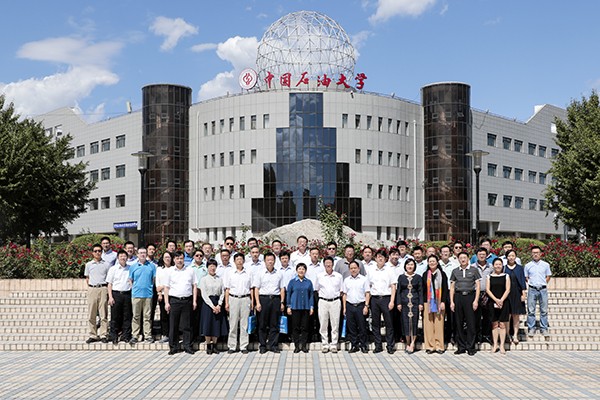
China University of Petroleum (CUP) is a leading public research university in China specializing in the petroleum, energy, and chemical industries. With main campuses in Beijing and Qingdao (East China), CUP is recognized for its strong programs in petroleum engineering, chemical engineering, environmental engineering, and energy science. The university offers a wide range of undergraduate, master’s, and doctoral programs, supported by experienced faculty and advanced research facilities. As a national key university under China’s Ministry of Education and part of the Double First-Class and Project 211 initiatives, CUP provides a globally oriented academic environment, attracting students from China and around the world. Its focus on innovation, research, and industry collaboration makes it a top choice for students pursuing careers in energy, engineering, and applied sciences.
Undergraduate: Full Scholarship
Graduate: Full Scholarship
Doctorate: Full Scholarship
Tuition: Free
China University of Petroleum is a top public university specializing in energy, petroleum, and chemical engineering, making it an ideal choice for students aiming for careers in the oil, gas, energy, and environmental industries. With strong research programs, modern laboratories, and experienced faculty, CUP provides hands-on learning and opportunities to participate in cutting-edge projects. Its campuses in Beijing and Qingdao offer a vibrant academic environment, scholarships for outstanding international students, and global exchange opportunities. The university’s focus on innovation, industry collaboration, and internationalization ensures graduates are well-prepared for both domestic and international careers in energy, engineering, and applied sciences.
At the Beijing campus, CUP offers merit‑based scholarships for outstanding international students:
• First‑Class Scholarship – Full support:
Tuition fees fully waived
Free on‑campus accommodation
Comprehensive medical insurance
Monthly living allowance (for 10 months/year): ~¥1,800 (Bachelor’s), ~¥2,000 (Master’s), ~¥2,500 (PhD)
• Second‑Class Scholarship – Major support:
Full tuition fee waiver
Free accommodation
Medical insurance included (no stipend)
• Third‑Class/Partial Scholarships – Varying support:
Might include accommodation fee waiver and medical insurance only, depending on category and eligibility.
These CUPB scholarships are competitive and based on academic merit and evaluation.
As part of national programs through the China Scholarship Council, international students at CUP can also apply for CSC funding which typically provides:
Full tuition waiver
Free dormitory OR housing allowance
Monthly stipend: ~¥2,500 (Bachelor’s), ~¥3,000 (Master’s), ~¥3,500 (PhD)
Medical insurance coverage
This award is widely regarded as one of the most comprehensive scholarships available in China and supports students throughout their degree.
Depending on the campus or location, additional scholarships may be available:
Xinjiang Uygur Autonomous Region or local government scholarships at some CUP campuses may offer:
• Tuition waiver
• Accommodation waiver
• Medical insurance
• Monthly living stipend (e.g., ~¥1,000–¥1,500)
Petroleum Engineering
Chemical Engineering
Oil and Gas Storage and Transportation Engineering
Environmental Engineering
Mechanical Engineering
Electrical Engineering
Civil Engineering
Computer Science and Technology
Information and Communication Engineering
Chemistry
Physics
Geology
Environmental Science
Material Science
Business Administration
Management Science
International Economy and Trade
Law
Humanities (limited programs)
1. Passport
2. All Academic Certificates & Transcripts
3. English Language Proficiency (IELTS/TOEFL)
4. Physical Examination Report
5. Personal Resume
6. Bank Statement (Over 2500 USD)
7. Award Certificate
8. NOC (if student in China)
Education is the backbone of a nation. We strongly believe that education is a fundamental right and everyone should have access to quality higher education. Education is the best option of investment for the families and the nation. It is the only means of human resources development to meet the upcoming challenges